

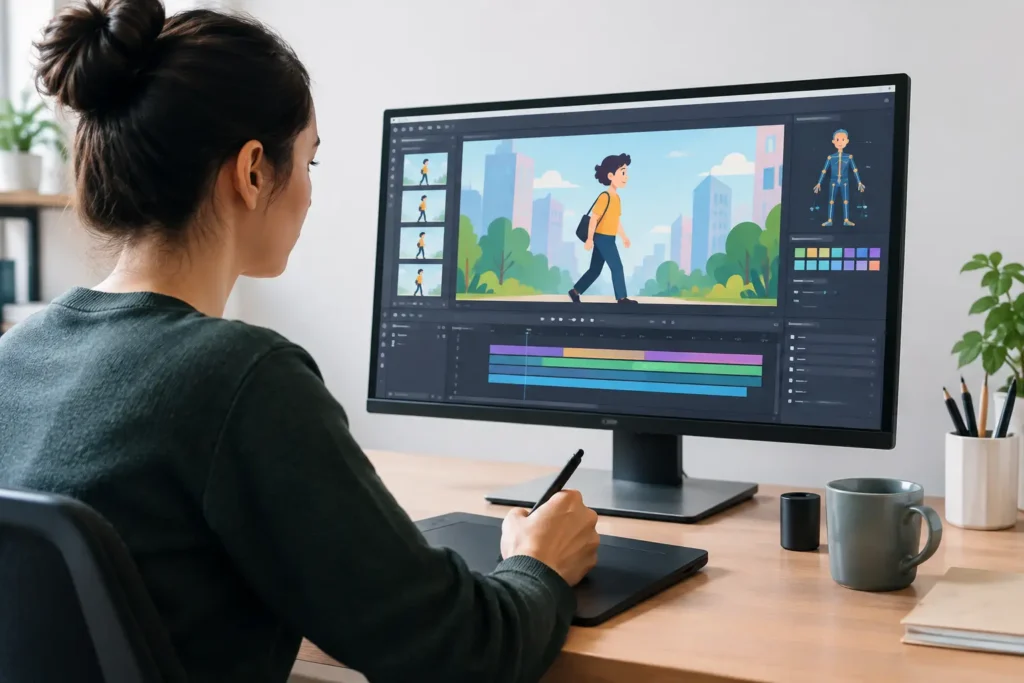
A strong animated video rarely starts with animation. It starts with a business problem that needs a clearer explanation: a product that is hard to understand, a sales pitch that loses attention, or a service that sounds more complicated than it is. This animation production guide shows how to turn that challenge into a video built to captivate, educate, and convert.
For marketing teams and growing brands, production is not just a creative exercise. It is a structured process for turning positioning, product knowledge, and customer insight into a visual story people can understand quickly. The quality of that process determines whether the final video feels persuasive or merely polished.
Start With the Outcome, Not the Visual Style
Before discussing 3D animation, motion graphics, or whiteboard illustration, define what the video must accomplish. A brand video can have a beautiful visual style and still underperform if the audience does not know what to do, why the message matters, or how the offer solves their problem.
Start by identifying the primary goal. That may be explaining a new platform, increasing demo requests, supporting a sales team, simplifying onboarding, or helping prospects understand a technical service. One video can support several goals, but it should have one clear priority. A product explainer designed for a landing page needs a different pace and call to action than a video used in a sales presentation or internal training program.
Clarify the audience next. The best message for a first-time buyer is not necessarily the best message for an experienced decision-maker. Consider what they already know, what creates hesitation, and what information they need before they are ready to take the next step. This is where animation earns its value: it can show processes, outcomes, and abstract concepts that would be difficult to explain in text alone.
A concise creative brief should establish the objective, audience, core message, preferred distribution channels, desired call to action, and success measure. If the goal is conversion, determine what conversion means before production begins. It could be a booked consultation, free-trial signup, form submission, or sales conversation.
Build the Story Before You Build the Scenes
Script development is the point where strategy becomes a story. It is also the stage that prevents expensive revisions later. Changing a sentence in a script is simple. Rebuilding an animated sequence after it has been rendered is not.
A useful business animation script usually follows a direct progression. It opens with a familiar problem, introduces the solution, shows how it works or why it is different, and gives viewers a clear next action. That structure is flexible, but the viewer should never have to work hard to understand the point.
The opening needs to earn attention quickly. Rather than leading with company history or a broad claim, begin with a situation the audience recognizes. For example, a software company may show the frustration of disconnected workflows before introducing its platform. A consulting firm may visualize the cost of unclear reporting before explaining its approach.
Keep the script focused on benefits, supported by proof. Features matter, especially for technical products, but features alone do not create momentum. Translate each important capability into a practical outcome. Instead of saying a system has automated routing, show that it helps teams respond faster, reduce manual work, or prevent leads from slipping through the cracks.
Length depends on the placement and complexity of the message. A 30-second social video requires a single sharp idea. A 60- to 90-second explainer offers more room for a problem-solution narrative. Longer videos can work for onboarding, product demonstrations, or detailed B2B use cases, but only when the audience has a reason to stay engaged.
Choose an Animation Style That Supports the Message
Style should reinforce comprehension and brand perception, not compete with the message. The right format depends on the concept, the audience, the production timeline, and the role the video will play in your wider marketing plan.
Motion graphics work particularly well for data, workflows, software interfaces, and fast-moving brand messages. They can make complex information feel organized and easy to follow. Whiteboard videos are effective when a concept needs to unfold step by step, especially for education, consulting, and service explanations where clarity is the priority.
3D animation can add depth, realism, and premium impact. It is often a strong choice for physical products, manufacturing processes, medical devices, architectural spaces, or technology that needs to be visualized beyond the limits of live action. It also requires more planning and production time than a simpler 2D treatment, so it should be selected because it improves the communication, not simply because it looks impressive.
Character animation can help humanize a service and make common customer challenges more relatable. On the other hand, highly detailed characters may be unnecessary if the video needs to explain a technical workflow to senior buyers. For many B2B campaigns, a clean visual system, strong icons, intuitive transitions, and purposeful typography offer the best balance of professionalism and speed.
Brand consistency matters in every format. Provide your logo files, brand colors, typefaces, existing design guidelines, and examples of content that feels right for your company. A production partner can recommend the right creative direction, but those materials help ensure the final asset looks like a natural extension of your brand.
The Animation Production Guide to Reviews and Approvals
Most production delays do not come from animation itself. They come from unclear feedback, too many reviewers, and decisions that surface after a project has moved into the next stage. A defined approval process keeps the work moving and protects both quality and budget.
The typical production flow includes discovery, scripting, storyboard development, voice-over selection and recording, visual design, animation, sound design, review, and final delivery. Each stage exists for a reason. The script confirms the message. The storyboard confirms how that message will be visualized. The animation brings approved ideas to life.
Review the script for accuracy, positioning, and flow. Review the storyboard for visual logic, brand fit, and scene-level clarity. Once animation begins, feedback should focus mainly on timing, movement, polish, and any details that were not visible in the storyboard. Reopening strategic decisions at the final stage creates unnecessary friction.
Assign one internal decision-maker to consolidate feedback. This person does not need to make every call alone, but they should resolve conflicting opinions before comments are sent to the production team. Feedback is most useful when it is specific. “Make this clearer” leaves room for interpretation. “Replace the jargon in scene four with the customer outcome and show the dashboard earlier” gives the team a practical direction.
It also helps to distinguish between must-have changes and personal preferences. A factual error, compliance concern, or confusing visual needs attention. A minor preference about an approved color shade may not justify revising a completed sequence. Good production partners will challenge ideas respectfully when a requested change risks weakening the video’s clarity or objective.
Plan for Voice, Sound, and Distribution
Voice-over and sound design are not finishing touches. They shape pace, credibility, and emotional impact. A confident, natural voice can make a technical explanation easier to absorb, while poor audio can reduce the perceived quality of even the strongest animation.
Select a voice that fits the audience and brand personality. A warm, conversational read may suit a customer-focused service brand. A measured, authoritative delivery may fit enterprise software, finance, or professional consulting. The right choice is not always the most dramatic voice. It is the one that makes the message feel credible and easy to follow.
Sound design should support the story without overwhelming it. Subtle effects can make on-screen actions feel tangible, while music can establish energy and keep transitions moving. The goal is control, not noise. Every audio choice should make the information easier to experience.
Plan deliverables around where the video will appear. A website explainer may need a horizontal version with captions. Paid social campaigns often require square or vertical cuts, shorter edits, and a more immediate opening. Sales teams may benefit from a version that ends with contact details or a tailored call to action. Creating these requirements early is more efficient than treating them as last-minute additions.
Captions are especially valuable because many viewers watch without sound. They also improve accessibility and help reinforce key phrases. For complex subjects, consider producing short supporting clips from the main animation. A single well-planned production can provide a cornerstone video plus focused assets for email, social media, presentations, and product pages.
Measure What the Video Actually Changes
Views can be useful, but they are not enough to judge a business animation. Measure performance against the goal established in the brief. For awareness campaigns, look at reach, completion rate, and brand engagement. For landing pages, examine time on page, click-through rate, form submissions, and conversion lift. For sales enablement, ask whether prospects arrive better informed and whether sales conversations move faster.
Qualitative feedback matters, too. If customers repeatedly say, “Now I get it,” the video is doing meaningful work. If sales representatives use it because it answers the same questions they face every week, it is helping create consistency across the buyer journey.
The strongest animation projects combine strategic planning with dependable execution. When every scene supports a specific business outcome, animation becomes more than content. It becomes a clear, persuasive asset your audience can understand, remember, and act on. That is the standard AnimateWiz brings to every production conversation.